
Bermuda and Zoysia Lawn Care for June in the Memphis Area: Mow, Water, Treat
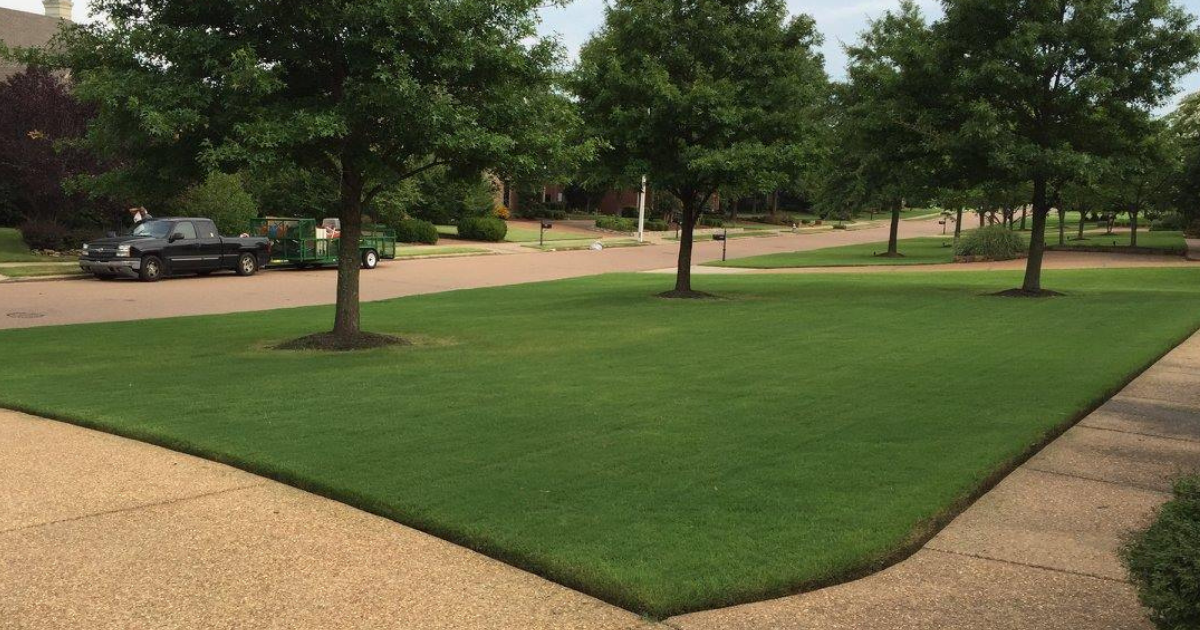
Short Answer: June is the inflection point of the lawn care year for Bermuda and Zoysia lawns across the Memphis area. The setup decisions you make this month determine whether the lawn holds color and density through July and August or quietly declines. The right June setup: mow at 2.5 to 3 inches for Bermuda, 3 to 3.5 inches for Zoysia, with sharp blades and weekly mowing. Water twice per week in early morning, delivering about an inch total per week. Apply moderate slow-release summer fertilizer with potassium. Schedule preventive grub treatment for late June. Skip the heavy nitrogen.
If you have a Bermuda or Zoysia lawn in Memphis, Germantown, Collierville, Bartlett, Cordova, or anywhere in Shelby County, June is the most important month for setting up summer success. Mid-South summers test lawns hard, and the ones that look consistent through August are almost always the ones that got June right.
We want to walk you through the three areas (mow, water, treat) that matter most this month.
Mowing: Height Matters More Than People Think
For Bermuda in our climate, the right summer mowing height is 2.5 to 3 inches. For Zoysia, 3 to 3.5 inches. These are taller than many homeowners cut. The benefits are dramatic.
Taller cuts shade the soil, which reduces surface temperatures by 10 to 15 degrees on hot days. Cooler soil holds moisture better and protects the grass crowns. Deeper roots develop because the lawn has more leaf area for photosynthesis. Weed seeds get less light to germinate.
The one-third rule matters too. Never cut more than one third of the blade in a single mow. If your target is 3 inches, mow before the lawn exceeds 4.5 inches. In practical terms, weekly mowing during peak growth.
Sharpen the blade. A dull blade tears the leaf tip and produces a hazy white look two days after mowing. Sharp blades cut cleanly and produce healthier turf.
Watering: Deep Infrequent in Early Morning
Most Memphis-area irrigation systems run daily 15-minute cycles. That schedule is fine for April. In June, it produces shallow roots that fail when July heat hits.
The right summer setup is two cycles per week, in the early morning (4 to 8 a.m.), delivering about half an inch each. Total of about an inch per week including rainfall.
For rotary heads (about a third of an inch per hour), that is 75 to 90 minutes per zone twice a week. For spray heads (about three quarters of an inch per hour), 35 to 40 minutes twice a week.
For clay-heavy soils common in the Memphis area, use cycle and soak. Split the runtime into 25-minute cycles with 45 minutes between to allow infiltration.
Validate with the screwdriver test. The morning after watering, a long screwdriver should slide into the soil 5 to 6 inches without significant resistance. If it stops at 2 to 3 inches, your watering is not penetrating deep enough.
Fertilizer: Moderate Slow-Release With Potassium
June is the right month for a summer feeding on warm-season lawns. The wrong move is heavy nitrogen, which pushes soft growth that cannot survive July heat. The right move is a moderate slow-release product with added potassium for heat and drought tolerance.
Apply at the lower end of the label rate range. Water in within 24 hours. Skip weed and feed combinations in June; the herbicide component often damages warm-season grass under heat stress.
If your lawn has been getting iron-deficient looking (pale color with green veins), a chelated iron application brings color back within 1 to 2 weeks. Worth considering for alkaline soil areas common in the Memphis region.
Preventive Insect Treatment
This is the most overlooked June step. Adult June beetles and other beetles are laying eggs in healthy irrigated lawns this month. The grubs that hatch in late July and August will damage lawns then. A preventive treatment in the last two weeks of June puts the product in the soil before eggs hatch.
Cost: $90 to $150 for a single application. Compare to August rescue work which can run $500 to $3,000 for sod replacement. The math heavily favors prevention.
For lawns with chinch bug history, a chinch bug preventive in June is also worth considering. Confirmed chinch bug activity in any yellow patches warrants targeted treatment.
What to Watch For Through the Month
Walk the lawn weekly to catch early signs.
Brown patch fungus (circular patches with darker rings on dewy mornings). More common on fescue but can affect Zoysia and Bermuda in our humid summers.
Chinch bug damage (yellow patches in sunny areas, soap flush test surfaces bugs).
Drought stress (footprints staying visible, blue-gray tint to blades, recovers with deep watering).
Coverage gaps in irrigation (predictable shapes matching where heads do not reach).
Five minutes of weekly observation catches problems at stage 1 when they are cheap to fix.
The Common Mistake That Undoes the Month
The most common June mistake we see is panic watering when the lawn looks slightly tired. Daily short cycles on a stressed lawn worsen the root system and accelerate decline. Stay on the twice-weekly deep schedule even when the lawn looks a little tired. The roots will rebuild faster than you think if you give them the chance.
What a Properly Set Up June Lawn Looks Like in August
For homeowners new to this approach, here is what to expect. A Bermuda or Zoysia lawn that got the right June setup typically holds dark even color through July despite the heat. Density stays high because the deeper roots can pull moisture from below the surface dry zone. Weed pressure stays low because the taller cut shades the soil. Disease pressure stays manageable because morning watering avoids the wet canopy that fungal diseases need. Pest damage stays limited because the preventive treatment knocked down populations before they could establish. By Labor Day, properly set up lawns look noticeably better than neighboring lawns that skipped the June setup steps. The compound effect over multiple seasons is dramatic.
What Service Pricing Looks Like
For homeowners considering professional service for the June setup and ongoing care, typical pricing in the Memphis area runs $80 to $140 per visit for individual treatments, or $500 to $1,000 for a full season program covering 6 to 8 visits. The June setup specifically can be one or two visits depending on what is needed. Bundled programs typically save money compared to per-visit pricing because we are already on the property for the routine work.
Frequently Asked Questions
Is it too late to start lawn care in June?
Not at all. June is actually a good entry point. The lawn is in active growth mode and responds well to proper care. Most new June customers see noticeable improvement by August.
What if my lawn already shows stress?
Fix the cause. Most June stress traces back to shallow watering, compacted soil, or pest issues. Identify which applies and address it. Adding fertilizer to a stressed lawn often makes things worse.
Can I aerate in June?
Bermuda and Zoysia are in peak growth so June aeration is viable. The main caution is heat stress; aerating a moisture-stressed lawn can compound the stress. Water deeply for a week before aerating.
How does Memphis humidity affect summer care?
Higher disease pressure, especially brown patch and dollar spot. Morning watering is more important here than in drier climates. Air circulation matters more. Mowing height adjustments help with disease pressure too.
The Sequence of Recovery If You Are Behind
For homeowners realizing in mid-June that their lawn is already behind on the setup, here is the catch-up sequence. Week 1: switch to deep infrequent watering immediately. Mow at proper height. Week 2: apply moderate summer fertilizer. Apply preventive grub treatment if not yet done. Week 3: assess thin spots and stress patterns. Spot-treat any visible weeds or pests. Week 4: walk the lawn for early issues and address as needed. Full catch-up usually produces visible improvement within 4 to 6 weeks. By Labor Day, the lawn typically looks dramatically better than it would have without intervention.
What Happens to Lawns That Skip the June Setup
For comparison, here is the typical trajectory of Bermuda lawns that skip the June setup. May looks fine because spring conditions support shallow-rooted growth. Early June shows initial stress as temperatures climb. Mid June: thin spots and color fade become noticeable. Late June to early July: yellowing patches in irrigation gaps, early chinch bug damage in sunny areas, weed pressure increases as the canopy thins. Mid July: significant damage in multiple areas. August: peak damage, expensive rescue work needed. By Labor Day the lawn is often 30 to 50 percent thinner than the same lawn properly set up in June. The compound effect across multiple years is dramatic. The lawns that look great in our climate are not luckier; they got June right.
What to Do Next
If you want help dialing in your June setup, we are glad to walk the property and put together specific recommendations. Call us at 901-290-8165 or visit roperlawncarememphis.com. We serve Memphis, Germantown, Collierville, Bartlett, Cordova, and surrounding Shelby County communities.